
pillar two of four
Natural, Nourishing, Local Food
Reconnecting with the source, the season and the people who grow it.


For generations we ate what the land gave close to home: corn, beans and squash, each in its season.
The Green Revolution, Ultra-Processed Food and the Global Chain (post-WWII)
This is where eating broke. In the 1950s the priority was feeding a population that was exploding, and quantity won over quality: produce plenty of cheap calories and move them far.
- What changed:Refined vegetable oils appeared, along with white flour at scale, sugar in everything and a supply chain that crosses continents.
- The cost:We went from eating «food from the earth» to «edible products» designed to survive the journey: addictive, nutritionally empty and cut off from whoever grew them.
The hidden cost of the global chain
An imported ultra-processed product does not only arrive empty of nutrients: it arrives after thousands of kilometres. That journey is paid for three times over, and none of it shows on the label.
- The haul:Thousands of kilometres by lorry, ship and plane for every ingredient, with the fuel and the CO₂ and other greenhouse gas emissions that demands.
- The packaging:Tonnes of single-use plastic that exist so the food survives the trip and the warehouse, not so it feeds you better.
- The waste:Spoilage and loss in transit, plus weeks in cold storage burning energy to preserve something that has already lost its nutrient density.
The counterweight: proximity and season
Buying in season and close to home reverses all three costs at once. Food is harvested ripe and arrives with its vitamins intact, middlemen and packaging fall away, the waste of the journey is cut, and the money stays with whoever grew it, a few kilometres from your table.
A Nutrition practice
A real, local dinner at sunset
An early dinner, cooked clean and built by proportions, so eating well stops being a decision you make all over again every night.
Have dinner at sunset
Serve dinner as the sun goes down, between 6:00 and 7:30 PM, or at least 2.5 to 3 hours before bed. Closing the digestive cycle early clears the way for melatonin and deep rest.
Serve the local triad
Half the plate in seasonal vegetables —that is where “one more plant” lives—, a quarter protein and a quarter carbohydrate from your region, plus one portion of healthy fat. Eyeball it: we do not measure calories, weight or portions.
Recommended ritual
Stock up, anchor, cook, serve, be present and notice
Six steps that hold each other up: each one takes friction out of the next, and only the two anchors make the dinner count.
- 1Stock up close to home: a market, a street market or a small producer; in season, in bulk and with your own bags and jars.
- 2Set the time anchor: have dinner as the sun goes down, between 6:00 and 7:30 PM.
- 3Cook clean: steam, air fryer or homemade broth; if you sauté, a few drops of avocado or extra virgin olive oil.
- 4Serve the triad: half the plate in local vegetables —that is where “one more plant” goes—, a quarter protein and a quarter carbohydrate from your region, plus a healthy fat.
- 5Eat present: no screens, chewing slowly and recognising where each thing came from.
- 6Notice the triple impact next morning: lightness on waking, less rubbish at home and your local economy kept alive.
This practice does not prescribe a diet or replace clinical advice. Adapt it to your allergies, intolerances, work schedule and access, and to guidance from your health professionals.
Near you
What is cooked and grown nearby, with whatever is closest to you first. Buying here shortens the trip to your plate and keeps the money in town.
Who has it nearby

Hazlo Sano
1. Sueño: Recuperación biológica y descanso optimizado. 2. Alimentación: Nutrición natural y conexión con el origen local. 3. Movimiento: Ejercicio funcional y actividad física constante. 4. Mente y Comunidad: Gestión emocional, propósito y conexión social.
434 publications
Visit the store
Nutrition
Practiqué Cocinar limpio
FoodPractice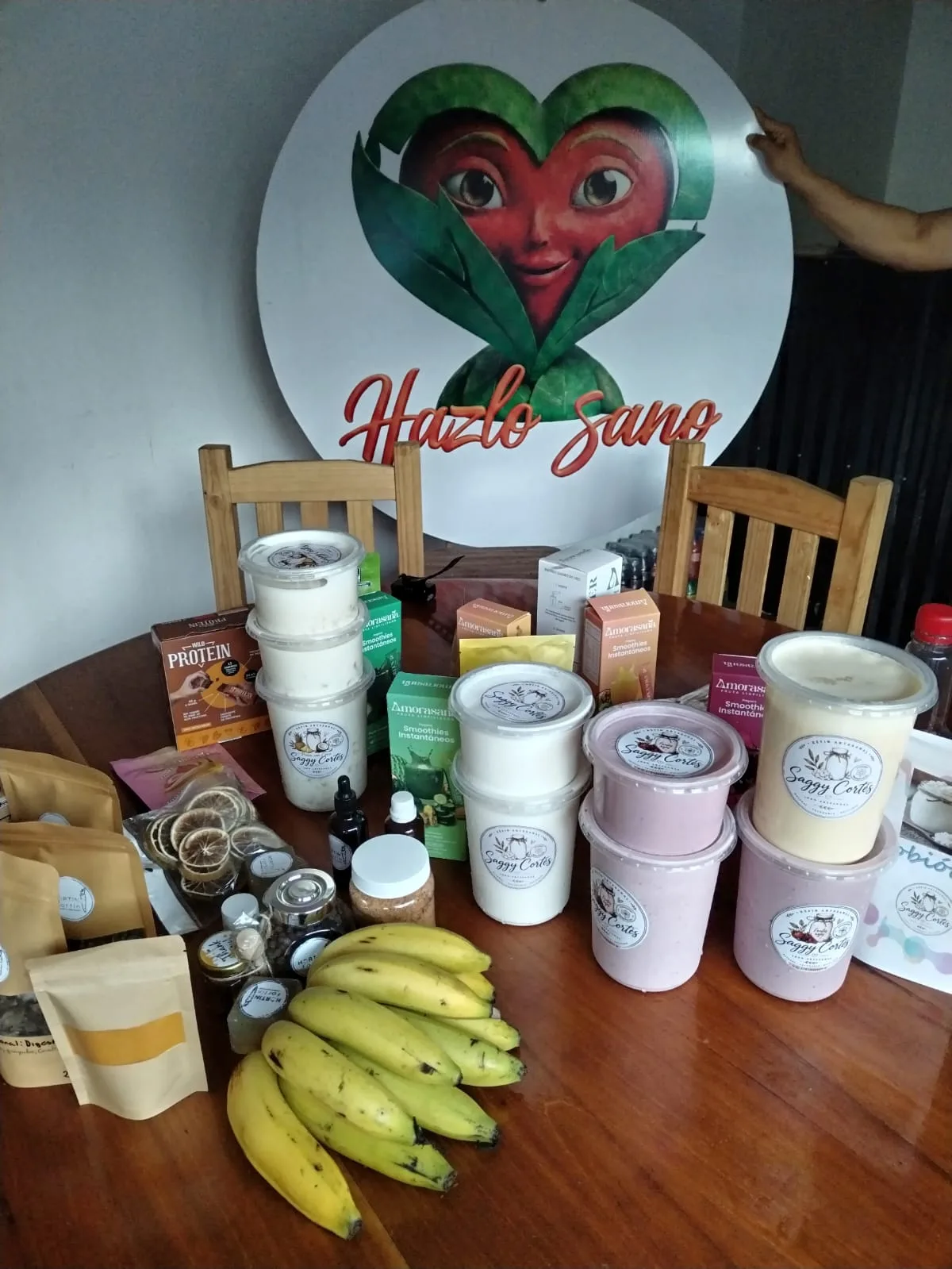
Natural Kéfir 1 liter
Hazlo Sano📍 LocalDairyMX$60.00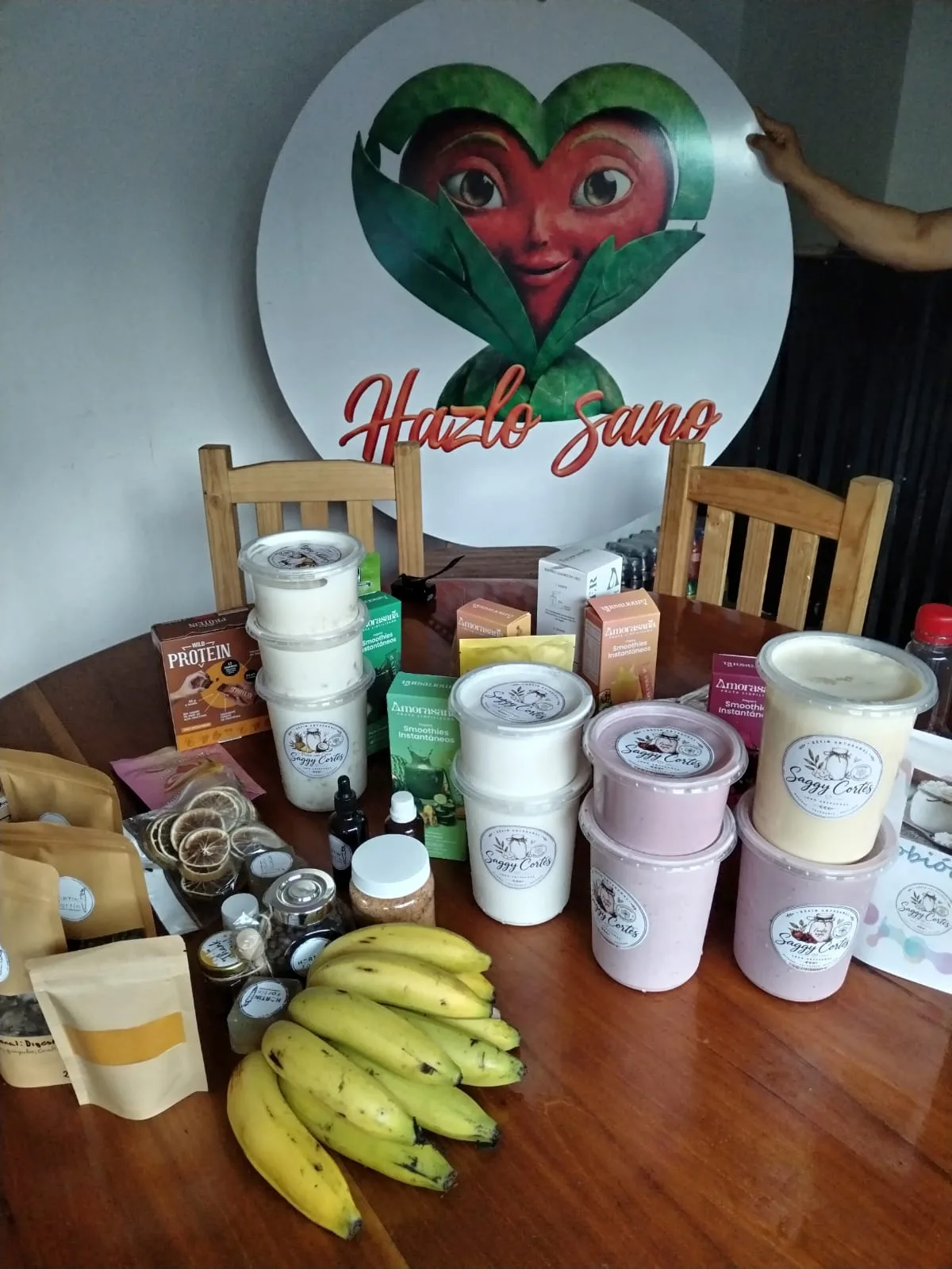
Kéfir de durazno 1 litro
Hazlo Sano📍 LocalDairy1 leftMX$80.00
Kéfir de piña y coco 1 litro
Hazlo Sano📍 LocalDairy2 leftMX$110.00The balanced plate triad
No scales and no calorie counting: you can see the proportion. Half the plate, a quarter and a quarter, plus one portion of healthy fat, with what is harvested nearby.
- 50 %
Local seasonal vegetables
Vegetables freshly harvested in your region, with no plastic packaging and no long journeys: fibre, micronutrients and volume. This is where “one more plant” happens.
- 25 %
Regional protein
Native legumes bought in bulk, free-range eggs from a nearby farm, sustainable local fish or pasture-raised poultry. Amino acids and satiety without overloading digestion at night.
- 25 %
Carbohydrates from your region
Local root vegetables, nixtamalised native maize, native squash or whole grains in bulk. Slow-release energy and fibre that feeds the gut microbiota.
Healthy fats from your region
Avocado from nearby groves, seeds in bulk or an artisanal nut butter with no additives. Without them vitamins A, D, E and K are not absorbed.
Clean cooking, without refined oils
Industrial seed oils —soy, maize, safflower, canola, sunflower— go through thermal and chemical refining. Heated up they produce aldehydes and pro-inflammatory compounds, and they almost always arrive bottled in plastic from far away.
What takes their place
Cold-pressed avocado oil
Medium-high heat: sautéing, roasting or griddling. Unrefined, its smoke point sits around 250 °C; the refined one reaches 271 °C, but loses on the way what we came here to protect.
Extra virgin olive oil
Raw or low heat: dressings and finishing. Cold-pressed and rich in polyphenols.
And what needs no added fat at all
Steam, air fryer, homemade vegetable or bone broths, and a well pre-heated cast iron or non-stick pan. They cook just as well, avoid oxidative stress and replace a packaged purchase.
A catalogue of nearby ingredients
What to buy, what it does for your body and what it does for your surroundings. The four categories the triad is built from.
Quality protein
- Regional protein
- In the body
- Complete amino acids for cell repair, lasting satiety and digestion that does not sit heavy at night.
- In the environment and the local economy
- Buying in bulk removes plastic packaging and long industrial refrigeration. The money goes straight to farming families in your area.
Complex carbohydrates
- Carbohydrates from your territory
- In the body
- Slow-release energy, prebiotic fibre that feeds the microbiota, and no sharp glucose or insulin spikes.
- In the environment and the local economy
- Cuts food miles and freight sharply, preserves the biodiversity of native seed and avoids the soil degradation of monoculture.
Healthy fats
- Healthy fats from your region
- In the body
- They let you absorb vitamins A, D, E and K, regulate the hormonal system and modulate the inflammatory response.
- In the environment and the local economy
- They keep small regional processors going and can be bought in reusable glass jars, with no disposable plastic.
Good oils and clean cooking
- Choosing oil by its smoke point
- Cooking clean
- In the body
- Thermal stability and fats that are not oxidised: less cellular stress and cardiovascular protection.
- In the environment and the local economy
- Displaces ultra-processed food tinned or bottled in plastic, and cuts the transport footprint and industrial fat waste.
How it connects with the other three pillars
These are not three more tasks. Two of these bridges are the same act you already do, told from the other pillar.
With Sleep: dinner sets your bedtime
Having dinner at sunset lets digestion finish before you lie down, and does not get in the way of the drop in body temperature deep sleep needs. It is the same act that protects your rest over there.
Go to the pillarWith Movement: going to the market is already moving
Walking or cycling to buy the week’s fresh food is at once this pillar’s sourcing and the other one’s engine-free trip. One journey counts for both.
Go to the pillarWith Mind and Spirit: the table without screens
Dinner with no devices in sight is also that pillar’s window of silence, and the stretch where a real conversation fits without scheduling anything.
Go to the pillar
Since the post-war years, the drive to produce lots of cheap calories (the Green Revolution plus food industrialisation) eased the shift towards ultra-processed food built on sugar, flour and refined oils, and towards a supply chain that moves food between continents. It solved much of acute hunger, but at the cost of diets that are less diverse and more «laboratory-made» — today strongly tied to chronic disease and environmental damage. Going back to patterns built on minimally processed, varied, seasonal and locally sourced food fits human and planetary health far better.
More than a diet, this pillar is about the connection to the source. It encourages real, seasonal, locally sourced food, and builds the bridge between the people who grow it and the people who cook it.
It covers:
- Backing restaurants and small producers that offer nourishing, seasonal options.
- Encouraging people to grow their own (urban gardens or permaculture cells).
- Building a setting where choosing healthy, fresh, nearby food is the easiest option.
References
- Ultra‐processed foods and the nutrition transition: Global, regional and national trends, food systems transformations and political economy drivers
Obesity Reviews · 2020
- The UN Decade of Nutrition, the NOVA food classification and the trouble with ultra-processing
Public Health Nutrition · 2017
- Ultraprocessed plant‐based foods: Designing the next generation of healthy and sustainable alternatives to animal‐based foods
Comprehensive Reviews in Food Science and Food Safety · 2023
- United States Dietary Trends Since 1800: Lack of Association Between Saturated Fatty Acid Consumption and Non-communicable Diseases
Frontiers in Nutrition · 2022
- Lessons From the Aftermaths of Green Revolution on Food System and Health
Frontiers in Sustainable Food Systems · 2021
- Ultra-processed foods and human health: the main thesis and the evidence
The Lancet · 2025
Supports: Real food, not ultra-processed
- The consumer of food products in organic markets of central Mexico
British Food Journal · 2017
Supports: Sourcing nearby and in bulk
- From Processed Foods to Ultraprocessed Foods: Evolution of an Industry Model and Impact on Dietary Quality, Health, and Society
Annual Review of Food Science and Technology · 2025
Supports: Real food, not ultra-processed
- The neglected environmental impacts of ultra-processed foods
The Lancet Planetary Health · 2020
Supports: Sourcing nearby and in bulk
- Ultra-processed foods and added sugars in the US diet: evidence from a nationally representative cross-sectional study
BMJ Open · 2016
Supports: Real food, not ultra-processed
- Challenges for future food systems: From the Green Revolution to food supply chains with a special focus on sustainability
Food Frontiers · 2022
Supports: Sourcing nearby and in bulk
- Ultra-Processed Foods: Definitions and Policy Issues
Current Developments in Nutrition · 2019
- From dearth to excess: the rise of obesity in an ultra-processed food system
Philosophical Transactions of the Royal Society B · 2023
Supports: Real food, not ultra-processed
- Processed foods and the nutrition transition: evidence fromAsia
Obesity Reviews · 2014
- A conceptual framework for understanding the environmental impacts of ultra-processed foods and implications for sustainable food systems
Journal of Cleaner Production · 2022
Supports: Sourcing nearby and in bulk
- Ultra-processed Foods and Cardiovascular Diseases: Potential Mechanisms of Action
Advances in Nutrition · 2021
Supports: Real food, not ultra-processed
- Representations of Ultra-Processed Foods: A Global Analysis of How Dietary Guidelines Refer to Levels of Food Processing
International Journal of Health Policy and Management · 2022 · clinical guideline
- Designing healthier and more sustainable ultraprocessed foods
Comprehensive Reviews in Food Science and Food Safety · 2024
- Refining Vegetable Oils: Chemical and Physical Refining
The Scientific World Journal · 2022
Supports: Choosing oil by its smoke point
- Ultra-Processed Foods and Food System Sustainability: What Are the Links?
Sustainability · 2020
- Endogenous circadian system and circadian misalignment impact glucose tolerance via separate mechanisms in humans
Proceedings of the National Academy of Sciences · 2015
Supports: A real, local dinner at sunset · Dinner at sunset
- Differential effects of the circadian system and circadian misalignment on insulin sensitivity and insulin secretion in humans
Diabetes, Obesity and Metabolism · 2018
Supports: A real, local dinner at sunset · Dinner at sunset
- Toxic aldehyde generation in and food uptake from culinary oils during frying practices: peroxidative resistance of a monounsaturate-rich algae oil
Scientific Reports · 2019
Supports: Cooking clean
- Evidence-Based Challenges to the Continued Recommendation and Use of Peroxidatively-Susceptible Polyunsaturated Fatty Acid-Rich Culinary Oils for High-Temperature Frying Practises: Experimental Revelations Focused on Toxic Aldehydic Lipid Oxidation Products
Frontiers in Nutrition · 2022
Supports: Cooking clean
- Avocado Oil
Gourmet and Health-Promoting Specialty Oils · 2009
Supports: Choosing oil by its smoke point
- Fruit and vegetable intake and the risk of cardiovascular disease, total cancer and all-cause mortality—a systematic review and dose-response meta-analysis of prospective studies
International Journal of Epidemiology · 2017 · meta-analysis
Supports: One more plant on the plate
- Fruit and vegetable consumption and mortality from all causes, cardiovascular disease, and cancer: systematic review and dose-response meta-analysis of prospective cohort studies
BMJ · 2014 · meta-analysis
Supports: One more plant on the plate
- MyPlate, Half-Plate, and No Plate: How Visual Plate-Related Dietary Benchmarks Influence What Food People Serve
Cureus · 2022
Supports: Serving the plate triad
- The Half-Plate Rule vs MyPlate vs Their Plate: The Effect on the Caloric Intake and Enjoyment of Dinner
Journal of Nutrition Education and Behavior · 2012
Supports: Serving the plate triad
- Effect of habitual dietary-protein intake on appetite and satiety
Appetite · 2000
Supports: Regional protein
- Carbohydrate quality and human health: a series of systematic reviews and meta-analyses
The Lancet · 2019 · systematic review
Supports: Carbohydrates from your territory
- Whole grain and refined grain consumption and the risk of type 2 diabetes: a systematic review and dose–response meta-analysis of cohort studies
European Journal of Epidemiology · 2013 · meta-analysis
Supports: Carbohydrates from your territory
- The Effect of Cooking and Cooling Chickpea Pasta on Resistant Starch Content, Glycemic Response, and Glycemic Index in Healthy Adults
Metabolites · 2024
Supports: Carbohydrates from your territory
- Carotenoid bioavailability is higher from salads ingested with full-fat than with fat-reduced salad dressings as measured with electrochemical detection
The American Journal of Clinical Nutrition · 2004
Supports: Healthy fats from your region
- Watching Television While Eating Increases Food Intake: A Systematic Review and Meta-Analysis of Experimental Studies
Nutrients · 2025 · meta-analysis
Supports: Eating with presence
- Watching television while eating increases energy intake. Examining the mechanisms in female participants
Appetite · 2014
Supports: Eating with presence