
pillar one of four
Sleep and Deep Rest
Sleeping to the rhythm of light again, not of screens.
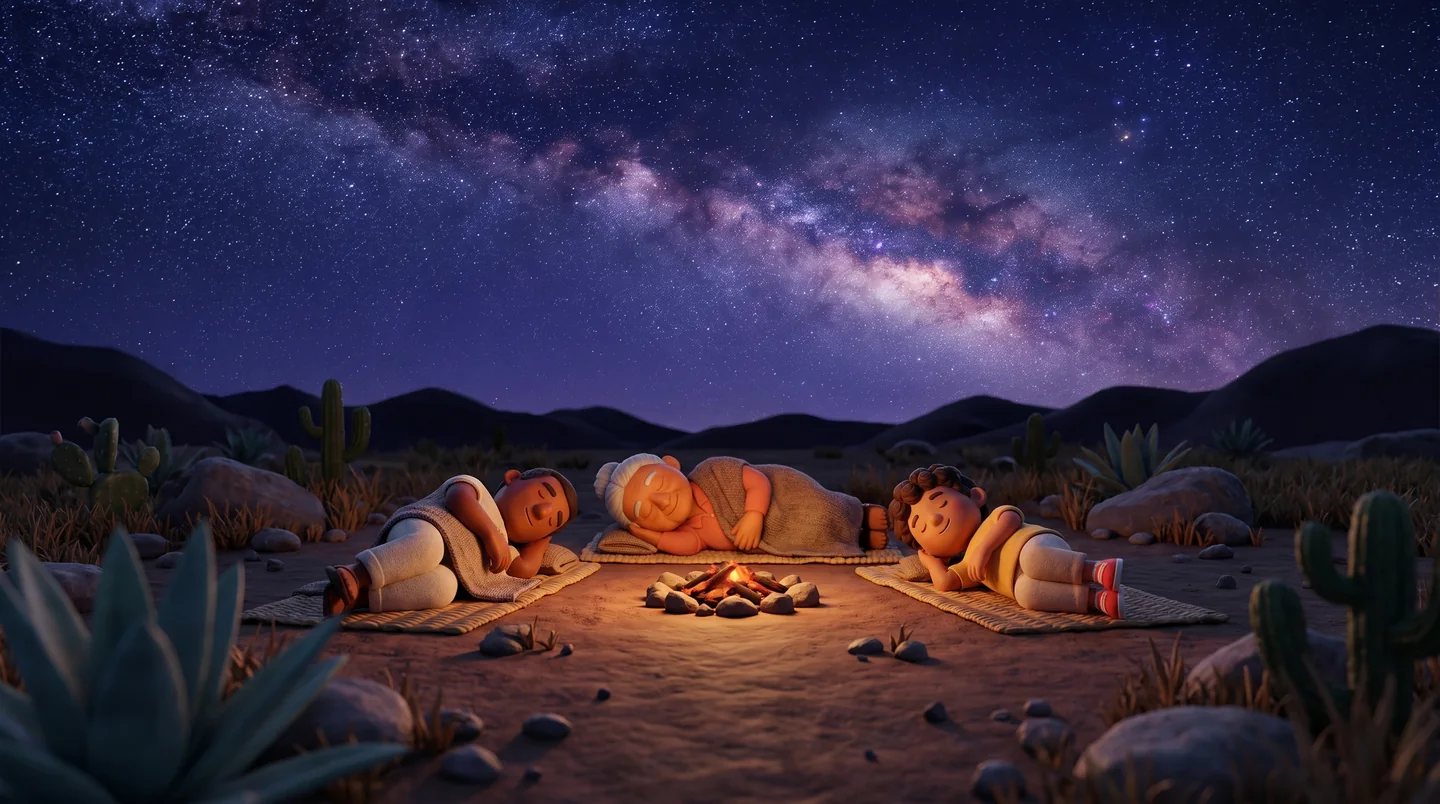
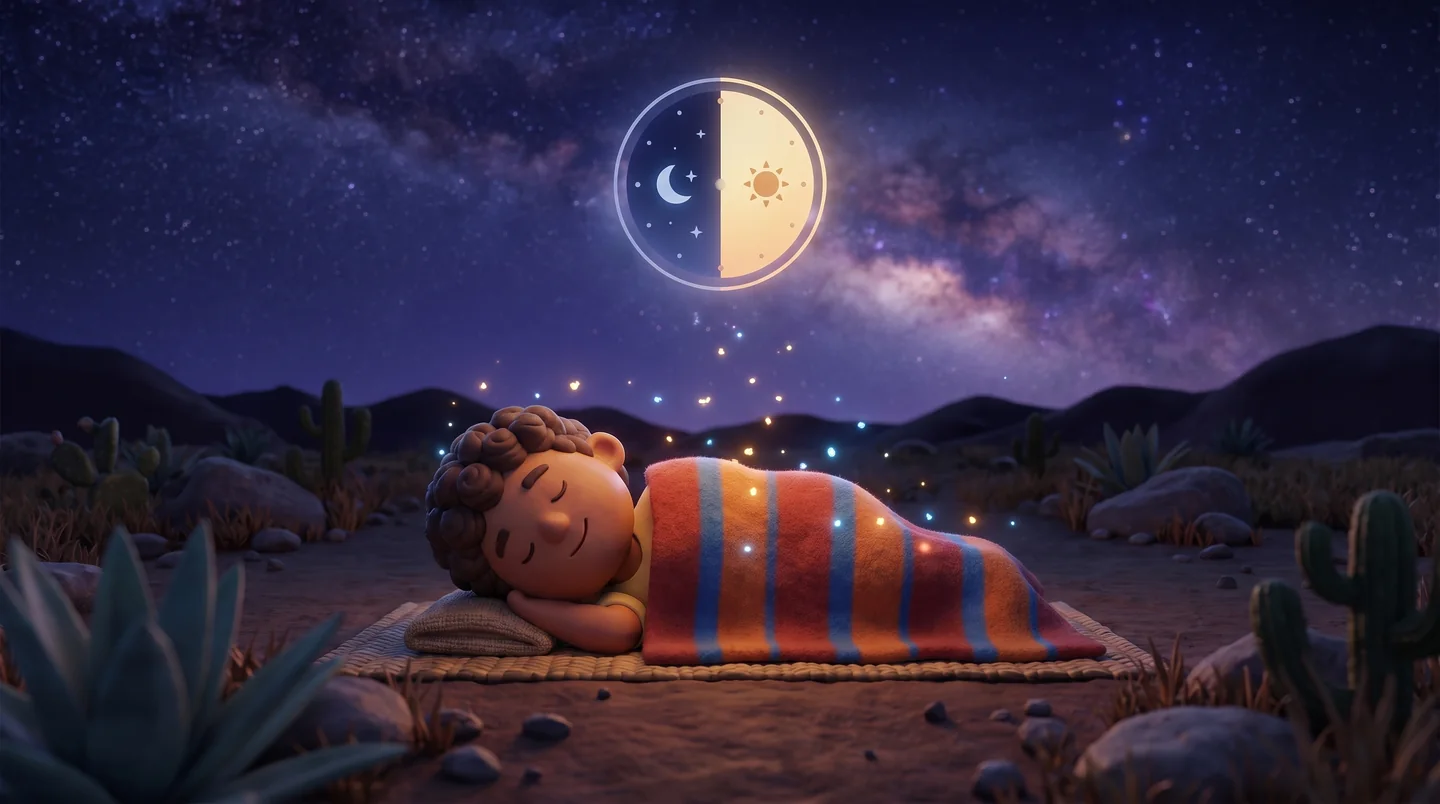
For hundreds of thousands of years, light decided when we slept. The sun went down, the fire died out and the night was truly dark.
The Invention of Electric Light (1879): The End of Natural Sleep
This is perhaps the harshest turning point for our brain. Before Thomas Edison and artificial light, our circadian rhythm — the internal clock — was perfectly in step with the sun.
- What changed:Night stopped being dark. We could work, eat and socialise long after sunset.
- The cost:The body stopped producing melatonin properly. We began stealing hours from rest, which set off the chronic stress and inflammation we now see everywhere.
The hidden cost of artificial light and 24/7 culture
Electric light and screens broke the oldest agreement your body had: that darkness meant sleep. Bright light at night holds melatonin back and makes the brain believe it is still midday. That is paid for three times over.
- Broken sleep:Falling asleep takes longer and you lose deep and REM stages, the ones that repair tissue and clear waste from the brain. You sleep the same hours and rest less.
- The debt to stimulants:Accumulated fatigue gets covered with caffeine and sugar in the morning, and that same caffeine gets in the way of the following night’s sleep. The circle closes on its own.
- Light that spills:Extra hours of electric light at home, and a neighbourhood night that never quite gets dark: light pollution also throws off the insects and birds that live nearby.
The counterweight: syncing with light again
You do not need to buy anything. Sun on your face on waking, warm low light at dusk, and a dark, cool room give back the signal your body has been waiting for all its life. It is the cheapest of the four pillars: almost all of it consists of switching things off.
Put it into practice
From dusk to dawn
A small ritual to close the night with intention and open the morning with natural light. You do not need to do all of it to start.
Your minimum version
These two anchors are enough for the repetition to count. The rest helps, but it does not turn your day into a failure.
Close the evening
An hour before bed, put screens out of reach and turn the lights down. Bright light at night holds melatonin back and tells your brain it is still midday.
Open the morning
Within the first hour after waking, step outside for 10 to 15 minutes of natural light, without sunglasses and without looking straight at the sun. That light sets your body clock and schedules tonight’s melatonin.
Recommended ritual
Close the day and open it with light
Five steps that fit into any ordinary night. Only the two anchors make the cycle count; the other three take friction away and are free.
- 1Anchor the morning with sun: 10 to 15 minutes of natural light in the first hour after waking, without sunglasses and without looking straight at the sun.
- 2Close things down digitally and dim the house an hour before bed: screens out of reach and warm, indirect light.
- 3Empty your mind onto paper: five minutes writing tomorrow’s tasks and whatever is going round in your head, so it does not come to bed with you.
- 4Step into a cool, dark, well-aired room, with the phone charging outside the bedroom.
- 5Notice the clarity on waking: how rested you feel and how much caffeine you actually need.
Light is taken outdoors and never by looking straight at the sun. Adapt movement to your capacity. If insomnia holds on over time, or if you snore or stop breathing while asleep, take it to a health professional: there are sleep disorders no ritual can fix.
Near you
What helps you sleep better and can be found nearby, from whoever has it closest. Rest is stocked in town too.
Who has it nearby

Hazlo Sano
1. Sueño: Recuperación biológica y descanso optimizado. 2. Alimentación: Nutrición natural y conexión con el origen local. 3. Movimiento: Ejercicio funcional y actividad física constante. 4. Mente y Comunidad: Gestión emocional, propósito y conexión social.
434 publications
Visit the store
Restorative Sleep
Hazlo SanoSleep hygieneMX$100.00The rest sanctuary
Your bedroom teaches your brain what happens in it. If you work, argue and browse there, the bed stops being a cue to sleep and becomes one more place to be awake. Three conditions reverse that.
Dark
Full darkness, or as close as you can get: thick curtains, and standby lights on devices covered or off. Darkness is the one signal your body accepts without arguing.
Cool and aired
To fall asleep, your body temperature has to drop by about a degree. A cool room with air moving does that work for you; a hot one blocks it no matter how tired you are.
No phone
The phone charging outside the bedroom, and a separate alarm clock. This is not willpower: it is putting physical distance between you and the midnight scroll, and between you and the notifications waiting when you open your eyes.
The mental unload
Your head does not switch off with the light. Whatever is unfinished keeps taking up room —an open task is remembered better than a completed one— and that is exactly what goes round and round once your head hits the pillow.
Five minutes and a notebook
Before bed, write down what you have pending for tomorrow and what is worrying you. You do not have to solve it or tidy it: getting it out of your body and onto paper you can come back to tomorrow is what lets your head let go. And make it what is pending, not what you already did: when this was measured in a lab, the people who wrote their to-do list fell asleep sooner than the ones who wrote up what they had achieved that day.
And drop a gear
Slow breathing, some light reading on paper or a caffeine-free infusion. Anything that tells your nervous system the day is over and there is no need to stay alert.
A catalogue of rest practices
What to do, what it does for your body and what it does for your electricity bill and the neighbourhood night.
Anchoring with sunlight
- Anchor the morning with sunlight
- Catch the evening light
- In the body and mood
- Sets the body clock, lifts your mood in the morning and schedules the following night’s melatonin.
- In spending and the environment
- Brings life onto the street at the hours the neighbourhood is awake, and saves artificial light during the day.
Environment and stimulus control
- A cool, aired room
- Dim the house an hour before
- Full darkness
- The bed, for sleep only
- The phone out of the bedroom
- In the body and mood
- Raises your own melatonin, cuts late-hour stimulation and shortens the time it takes you to fall asleep.
- In spending and the environment
- Lowers the household’s electricity use and adds less spilled light to the community’s night.
Mental closure and calm
- A hot caffeine-free infusion
- A paper book beside the bed
- The mental unload
- In the body and mood
- Frees your head of what is pending, stops rumination and slows the pulse so you get into bed calm.
- In spending and the environment
- Leans on plants you can buy in bulk and in season, rather than on one more packaged purchase.
How the other three pillars arrive here
Rest is where everything else is settled up. And these are not extra tasks: the three bridges already exist on the other pages, and here is where you find out whether they were kept.
From Nutrition: dinner at sunset
An early dinner lets digestion finish before bed, and does not get in the way of the drop in body temperature deep sleep needs.
Go to the pillarFrom Movement: moving by day and outdoors
Moving during the day builds up the sleep pressure that makes your body ask for rest at dusk, and outdoor light reinforces the same clock that anchors your morning.
Go to the pillarFrom Mind and Spirit: the last hour screen-free
The mental unload and the digital close calm the nervous system, so you get to bed without your head still running.
Go to the pillar
How many processes depend on sleep?
Sleep takes part in many essential functions, not just one:
- Brain and mind: memory and learning, synaptic plasticity, emotional and mood regulation.
- Metabolism and energy: regulating spend and replenishment of energy, anabolism, cell maintenance and clearing the brain's «waste» (the glymphatic system).
- Immune system and inflammation: defence against infection, response to vaccines, and control of the inflammation tied to cancer, depression and cardiovascular disease.
- Cardiovascular and endocrine: blood pressure, glucose, stress hormones, appetite hormones, reproductive health.
- Overall homeostasis: balance across organ systems, metabolism, and psychological and social state.
The scientific evidence shows that sleep is involved in practically every critical process of body and mind. It is not a luxury: it is the physiological base of attention, memory, emotional stability, metabolism, immunity and long-term cardiovascular health.
This pillar is the ground floor of biological recovery. It is not just about «sleeping», but about improving your sleep hygiene so body and mind can properly repair themselves. At Hazlo Sano, the aim is for technology to help track and encourage routines that respect circadian rhythms.
References
- Timing of light exposure affects mood and brain circuits
Translational Psychiatry · 2017
Supports: Anchor the morning with sunlight · Catch the evening light · From dusk to dawn
- Health Effects of Disrupted Circadian Rhythms by Artificial Light at Night
Policy Insights from the Behavioral and Brain Sciences · 2023
- Association between light at night, melatonin secretion, sleep deprivation, and the internal clock: Health impacts and mechanisms of circadian disruption
Life Sciences · 2017
Supports: Full darkness
- Electric light, particularly at night, disrupts human circadian rhythmicity: is that a problem?
Philosophical Transactions of the Royal Society B: Biological Sciences · 2015
- Screens after Sunset: The Science of Blue Light, Circadian Disruption, and Sleep Impairment
Adolescent Psychiatry · 2025
Supports: A paper book beside the bed · Dim the house an hour before · The phone out of the bedroom
- High sensitivity and interindividual variability in the response of the human circadian system to evening light
Proceedings of the National Academy of Sciences · 2019
Supports: Dim the house an hour before
- 0038 Sleeping with Low Levels of Artificial Light at Night Increases Systemic Inflammation in Humans
Sleep · 2019
Supports: Full darkness
- Effects of light on human circadian rhythms, sleep and mood
Somnologie · 2019
Supports: Anchor the morning with sunlight
- Evening home lighting adversely impacts the circadian system and sleep
Scientific Reports · 2020
Supports: Dim the house an hour before
- LIGHT POLLUTION: a systematic review about the impacts of artificial light on human health
Biological Rhythm Research · 2022 · systematic review
- Circadian Rhythms Disrupted by Light at Night and Mistimed Food Intake Alter Hormonal Rhythms and Metabolism
International Journal of Molecular Sciences · 2023
- Impact of artificial light at night and night shift work on brain functions and metabolism
General and Comparative Endocrinology · 2025
- Development and Verification of a 480 nm Blue Light Enhanced/Reduced Human-Centric LED for Light-Induced Melatonin Concentration Control
ACS Omega · 2023
- Effects of outdoor artificial light at night on human health and behavior: A literature review
Environmental Pollution · 2023
- Investigation on entraining and enhancing human circadian rhythm in closed environments using daylight-like LED mixed lighting
Science of The Total Environment · 2020
- Effects of artificial light at night on human health: A literature review of observational and experimental studies applied to exposure assessment
Chronobiology International · 2015
Supports: Full darkness
- Breast cancer and circadian disruption from electric lighting in the modern world
CA: A Cancer Journal for Clinicians · 2013
- Light Wavelength Modulates the Effects of Lighted Nights on Sleep, Metabolism and Oxidative Stress in Female Zebra Finches
Journal of Experimental Zoology Part A: Ecological and Integrative Physiology · 2025
- Light Pollution and Circadian Misalignment: A Healthy, Blue-Free, White Light-Emitting Diode to Avoid Chronodisruption
International Journal of Environmental Research and Public Health · 2022
- Light at night disrupts biological clocks, calendars, and immune function
Seminars in Immunopathology · 2021
- Mechanisms, consequences and role of interventions for sleep deprivation: Focus on mild cognitive impairment and Alzheimer’s disease in elderly
Ageing Research Reviews · 2024
- Sleep deprivation and stress: a reciprocal relationship
Interface Focus · 2020
- The two‐process model of sleep regulation: a reappraisal
Journal of Sleep Research · 2016
- Sleep physiology, pathophysiology, and sleep hygiene
Progress in Cardiovascular Diseases · 2023
Supports: The bed, for sleep only
- Effects of Sleep Deprivation on Physical and Mental Health Outcomes: An Umbrella Review
American Journal of Lifestyle Medicine · 2025
- Sleep and circadian rhythmicity as entangled processes serving homeostasis
Nature Reviews Neuroscience · 2023
- Sleep is essential to health: an American Academy of Sleep Medicine position statement
Journal of Clinical Sleep Medicine · 2021 · clinical guideline
- Short sleep duration and health outcomes: a systematic review, meta-analysis, and meta-regression
Sleep Medicine · 2017 · meta-analysis
- The two‐process model of sleep regulation: Beginnings and outlook †
Journal of Sleep Research · 2022
- Which Is More Important for Health: Sleep Quantity or Sleep Quality?
Children · 2021
- Sleep, Health, and Society
Sleep Medicine Clinics · 2022
- Biological Mechanisms of Sleep/Wake-Related Function
Biological Psychiatry · 2025
- Why Sleep Is Important for Health: A Psychoneuroimmunology Perspective
Annual Review of Psychology · 2015
- What Is Sleep Deprivation?
American Journal of Respiratory and Critical Care Medicine · 2019
- Functions and Mechanisms of Sleep
AIMS Neuroscience · 2016
- Cardiovascular, Inflammatory, and Metabolic Consequences of Sleep Deprivation
Progress in Cardiovascular Diseases · 2009
- MANUTENÇÃO DA HOMEOSTASE E DO FUNCIONAMENTO BIOLÓGICO: Implicações do dormir e do sono no cotidiano das pessoas
Psicologia e Saúde em Debate · 2024
- The Function(s) of Sleep
Handbook of Experimental Pharmacology · 2018
- The need to promote sleep health in public health agendas across the globe
The Lancet Public Health · 2023
- Sleep deprivation and its association with diseases- a review
Sleep Medicine · 2021
- Exposure to Room Light before Bedtime Suppresses Melatonin Onset and Shortens Melatonin Duration in Humans
The Journal of Clinical Endocrinology & Metabolism · 2011
Supports: Dim the house an hour before · From dusk to dawn
- Effects of thermal environment on sleep and circadian rhythm
Journal of Physiological Anthropology · 2012
Supports: A cool, aired room
- The effects of bedtime writing on difficulty falling asleep: A polysomnographic study comparing to-do lists and completed activity lists.
Journal of Experimental Psychology: General · 2018
Supports: The mental unload
- Effects of an intervention with drinking chamomile tea on sleep quality and depression in sleep disturbed postnatal women: a randomized controlled trial
Journal of Advanced Nursing · 2015
Supports: A hot caffeine-free infusion
- Self-regulatory behaviour change techniques in interventions to promote healthy eating, physical activity, or weight loss: a meta-review
Health Psychology Review · 2020
Supports: Notice the clarity on waking